It's third period. A teacher gets pulled into a hallway issue, the bell rings, and the attendance for that class never gets submitted. Nobody notices until the office runs the missing-attendance report at 11am. Now an attendance clerk is calling around trying to figure out who was actually in that room two hours ago.
It feels like a tiny thing. One forgotten click. But in a lot of schools, that forgotten click has a price tag on it, and it's bigger than most people expect.
So what does it actually cost?
In a handful of states, including the two largest, California and Texas, schools aren't funded by how many students are enrolled. They're funded by how many students are recorded present. It's called Average Daily Attendance, or ADA, and the math is straightforward: total days students were marked present, divided by total instructional days. [1]
The important word there is "marked." A student can be sitting right there in the room, but if the teacher never submits attendance for that class, the district can't count them that day.
Here's what that looks like with real numbers. In California, each school day is worth roughly $74 to $84 per student in ADA funding. [2] In Texas, the state basic allotment is $6,160 per student per year, roughly $34 per student per school day across a 180-day calendar. [3]
Take a 1,000-student school in California where teachers leave just 1.5% of present students unrecorded each day, about 15 kids. At $74 per student per day, that's roughly $1,110 a day in unclaimed funding. Over 180 school days, that's around $200,000 a year. From forgotten clicks. (This is an illustrative example using sourced per-day figures; actual loss will vary by district.)
For a mid-sized district, those numbers add up fast. Keller ISD in Texas has roughly 33,000 students. [4] At the state's basic allotment of $6,160 per student, a single percentage-point drop in average daily attendance (about 330 students going unrecorded) costs the district roughly $2 million in lost funding. And a good chunk of that gap isn't kids skipping school. It's attendance that never got recorded correctly in the first place. [3]
The problem isn't the teachers. It's the system.
No teacher forgets attendance on purpose. They forget because taking it is a manual task fighting for attention against thirty other things at the start of class, and because the tools make it easy to forget in the first place.
If you run PowerSchool, you already know the pattern. PowerSchool even has a report built for exactly this: the Teacher Attendance Submission Status report, which tells you which teachers haven't taken attendance yet. That report exists because missing attendance is a daily, predictable problem in almost every building. The software can tell you attendance is missing. It just can't take it for you.
So the routine becomes: teachers try to remember, the office chases the ones who forgot, clerks rebuild the gaps from memory, and the district hopes the final number is accurate enough to defend. That's a lot of work to land on a number that's still basically a best guess.
What "one click" attendance actually means
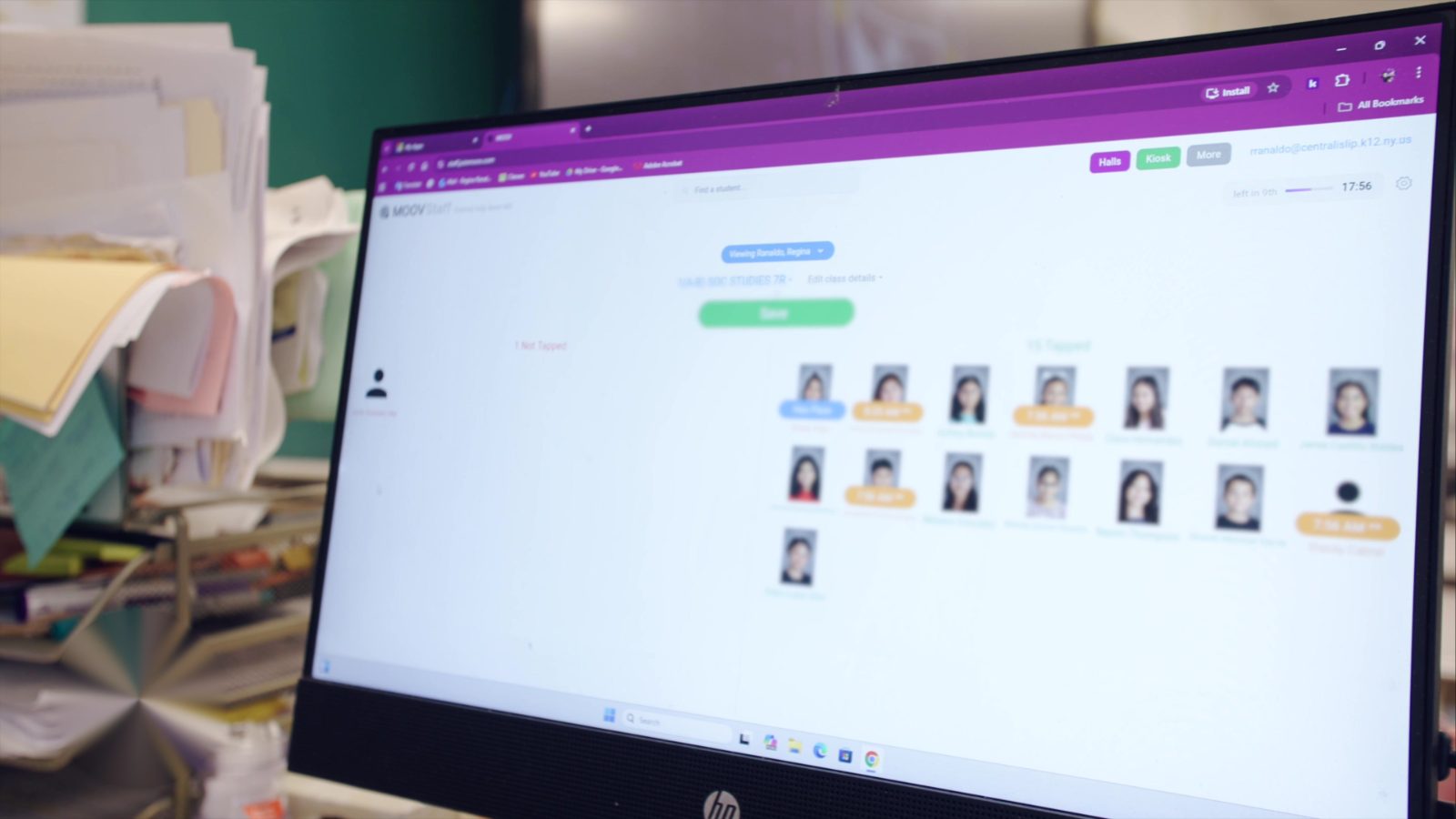
One-click attendance means the teacher reviews what's already on the screen and confirms it with a single button. The record gets created automatically. No manual entry, no remembering to start from scratch.
That's the part most schools are missing. Reminders, reports, and nudges still depend on a busy human doing the right thing at the right moment. MOOV doesn't replace the teacher. It does the heavy lifting so the teacher's job is just to verify and save. Attendance still requires a human sign-off. It just doesn't require a human to build it from scratch anymore.
How MOOV can help
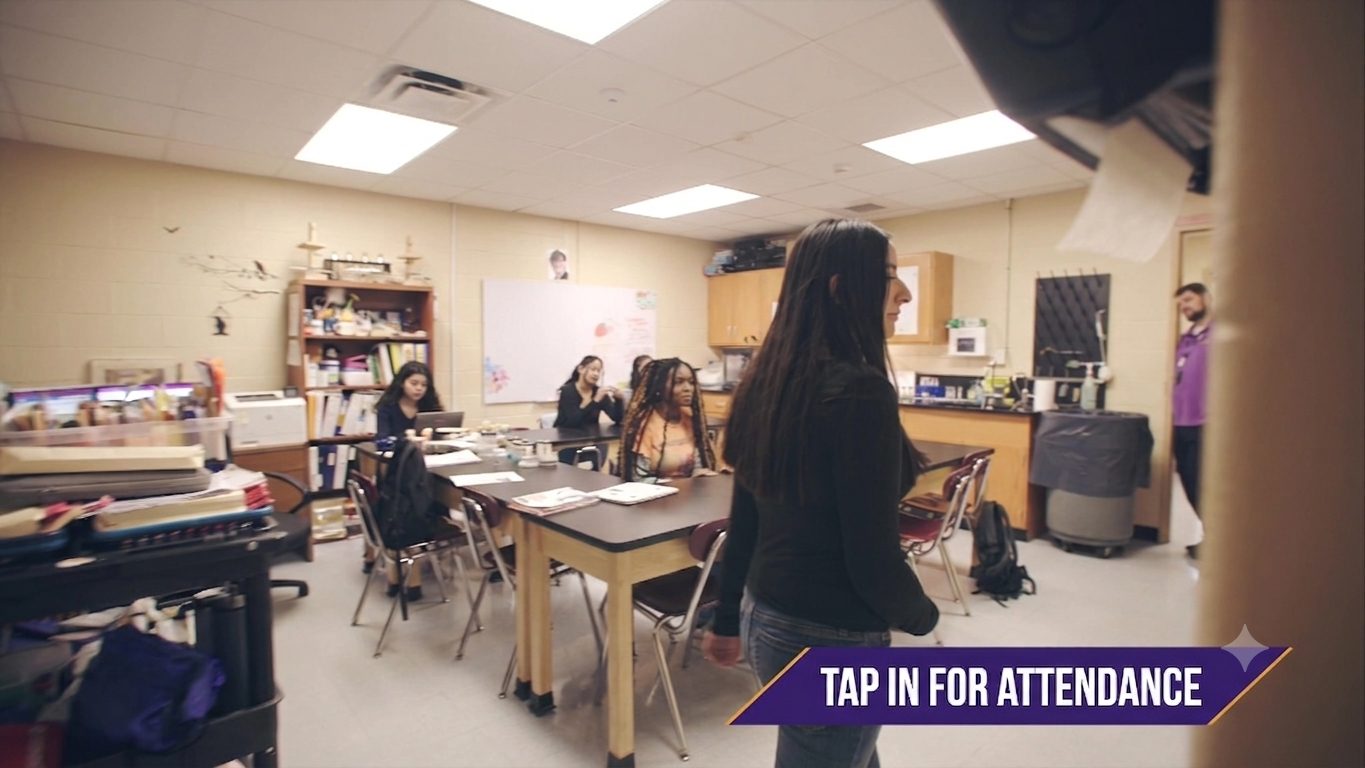
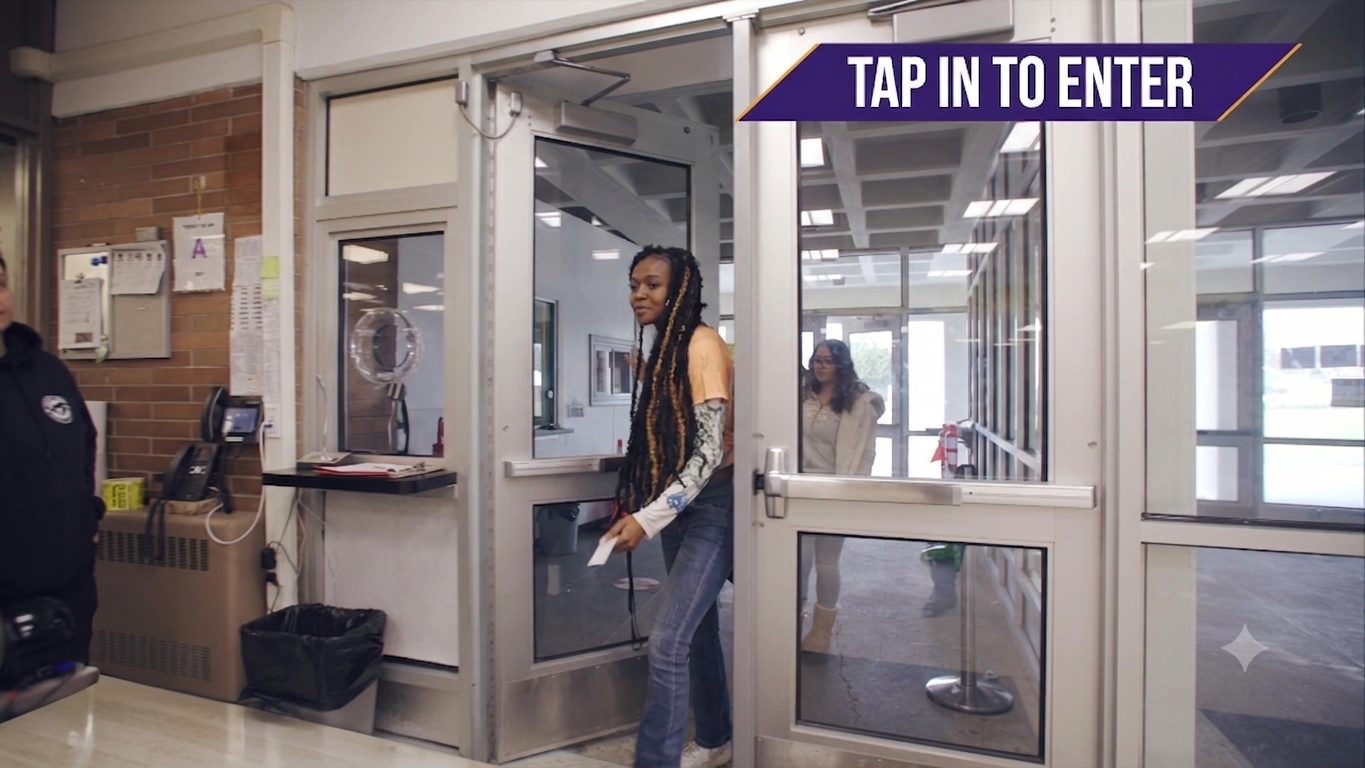
MOOV is a card-based system. A student taps their school ID on the Magic Reader, and that one tap pre-populates attendance automatically for a teacher to review and confirm. No roll call, no clicking through a roster, no Google Form, no counting on a teacher to remember in the middle of the morning rush.
Here's what that changes:
The record builds itself. A student taps in and attendance is pre-populated in real time for a teacher to quickly confirm and submit. No more "I forgot to submit third period."
It syncs to PowerSchool.* The attendance MOOV captures flows into the system you already use, so your office isn't chasing missing classes or rebuilding the count by hand.
Teachers get their time back. No manual attendance means about two minutes back every period, and those minutes go to teaching instead of paperwork.
The number you report is the number that happened. When attendance comes from a tap instead of someone's memory, the count you send the state is one you can actually stand behind.
So those dollars you were losing to forgotten clicks? You stop losing them. Not because teachers try harder, but because the system stops depending on anyone trying at all.
*MOOV syncs with most major SIS systems including eSD, PowerSchool, Skyward, Aspen, InfiniteCampus, and SchoolTool.